
A Glossary of 12 Centerless Grinding and Thread Rolling Terms Customers Should Understand
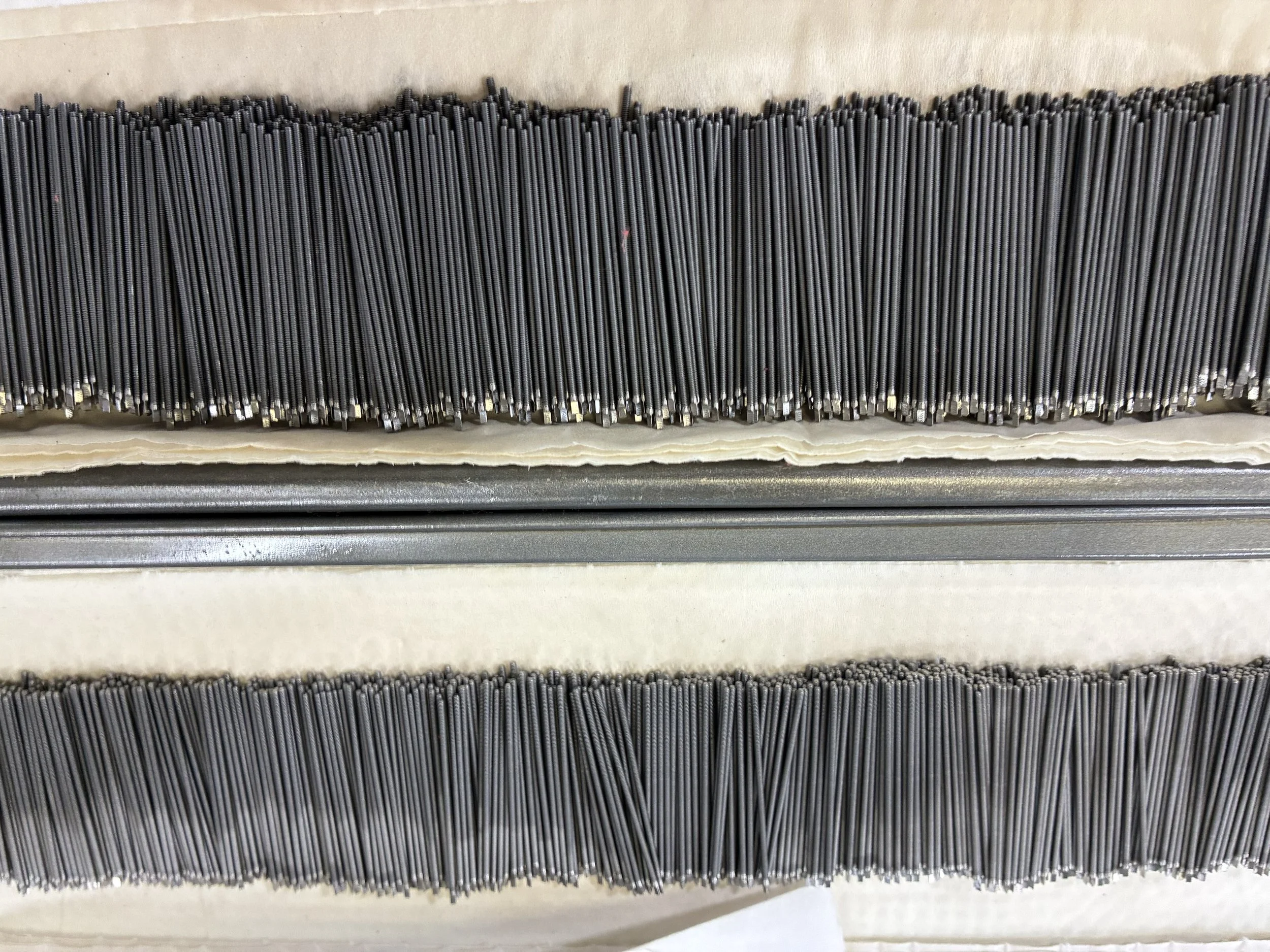
At United Centerless Grinding & Thread Rolling, we offer a range of services for precision parts. The technical differences between these processes can be complex, and buyers do not need to understand every detail to get the right result. After all, an experienced manufacturing partner like UCGTR can always help you select the right process.
Even so, knowing some important terms can make it easier to communicate requirements and understand which process (and which shop) may be the best fit for your part. This glossary covers some common centerless grinding and thread rolling terms that often come up during RFQs or other customer conversations.
Cylindrical Grinding Methods to Understand
1. Centerless Grinding
Centerless grinding is a machining process used to remove material from the outside diameter of a cylindrical part. It is distinct from many other grinding methods because the part is not held between centers or clamped in place.
Because each part does not need to be individually clamped or held between centers, centerless grinding can be highly effective for production work and high volumes. We recommend centerless grinding services for parts that require tight diameter control and smooth surface finishes, such as pins, shafts, rods, bars, and more.
2. Outside Diameter Grinding / Grinding on Centers
At United Centerless Grinding and Thread Rolling, we do not offer OD grinding, but it is a key term for buyers to understand as they select the right shop for their part.
Like centerless grinding, OD grinding is used to grind the external surface of a cylindrical part. However, OD grinding usually holds the part between centers, which makes it a better option when a part has features that must be controlled precisely to the centerline.
Print Requirements That Affect the Right Grinding Choice
3. Centerline Requirements (and How to Choose Between OD and Centerless Grinding)
For buyers, this is one of the most important concepts to understand before sending an RFQ.
Centerline requirements come up when one feature must be controlled relative to the centerline of the part. If your part has features that are controlled precisely to the centerline, OD grinding will likely be necessary. Because centerless grinding does not hold the part between centers, it can be difficult to qualify that spec to the centerline.
4. Surface Finish
Surface finish describes the texture or smoothness of a part’s surface. On a print, it is often shown as a roughness value, such as Ra. Centerless grinding is often used when a part needs a smoother or more controlled surface than earlier machining steps can accomplish. At UCGTR, we can achieve surface finishes as fine as 6 microinches Ra.
Types of Centerless Grinding We Offer
5. Thru-Feed Grinding
Thru-feed grinding is a type of centerless grinding where the part passes straight through the machine between the grinding wheel and the regulating wheel. This method is best, in general, for parts with a consistent outside diameter; features like shoulders or steps will not allow the part to pass through continuously.
6. In-Feed Grinding / Plunge Grinding
In-feed grinding (which we also refer to as plunge grinding, form grinding, or end-feed centerless grinding) is used when a part cannot pass straight through the machine due to its geometry. In this process, the grinding wheel is fed into the part at specific locations.
7. Bar Grinding
Bar grinding is essentially what it sounds like: centerless grinding on long bars or stock material. This is often an early step to prepare material for later machining. Buyers may request bar grinding when they need consistent diameter, improved straightness, or better surface finish for the next operation. At UCGTR, bar grinding is often part of a larger production process.
8. Crush Grinding
Crush grinding is a multi-step process. First, a crush roll is used to form a grinding wheel, transferring its geometry into the wheel face. Next, that wheel plunge grinds the part itself to the necessary geometry.
Crush grinding is often requested by customers, but it is not always the most cost-effective choice because crush rolls may need to be custom-made. We’ll always discuss your options if we believe there is an equally effective process that may reduce your overall cost.
9. Form Grinding
Centerless form grinding uses a wheel with a cutting face that is the reverse shape of the final cylindrical part. This process can achieve multiple features with tight tolerances very efficiently, and it’s compatible with both heat-treated parts and exotic materials.
Thread Rolling vs. Thread Cutting
10. Thread Rolling
Thread rolling is a cold-forming process used to create threads on a part. Instead of cutting material away, precision thread rolling forms threads by pressing dies into the material and displacing it into the thread shape.
Rolled threads are typically stronger than cut threads. They also tend to have a smoother finish without cut marks or the need for secondary polishing. It’s ideal for high-volume production because thread rolling machines operate at significantly higher speeds than thread cutting machines.
11. Thread Cutting
Thread cutting forms threads by physically cutting away and removing material from the workpiece. It can be the right choice for some applications, including large threads and certain materials that are very hard or brittle.
United Centerless Grinding & Thread Rolling does not offer thread cutting, but understanding the difference can help buyers compare their options.
12. Blank Diameter in Thread Rolling
In thread rolling, blank diameter is the outside diameter of a part section before the thread is rolled. This number is critical because thread rolling displaces material instead of removing it, so the starting blank diameter must account for how the material will move during the rolling process.
If the blank diameter is incorrect, the finished thread may not meet the required specifications. This can sometimes be a problem when a customer supplies parts that have already been machined or ground to the final dimensions rather than the correct pre-roll diameter.
We’ll Guide You Through the Process
These are some of the important terms that may come up when evaluating centerless grinding and thread rolling options. Of course, when you’re in the weeds of grinding and thread rolling every day like we are, there are countless other technical details to consider. But buyers can usually start with the basics, and we’ll help you understand anything else that comes up.
If you have a part that may benefit from centerless grinding or thread rolling, our team can help you evaluate the best path forward. Request a quote today!