
Swiss Machining for Tough Materials: One Partner From Bar Prep to Finishing
At United Centerless Grinding and Thread Rolling, we aim to serve you as a one-stop shop through our range of capabilities, from wire EDM machining to cylindrical profile grinding. But it’s not just the breadth of our services that allows us to handle so many of your projects. It’s also our readiness to tackle difficult work like Swiss machining for challenging materials like A286, Inconel, 17-4 stainless steel, and more.
By combining Swiss with other complementary capabilities, both upstream and downstream, tough materials become far more manageable. Instead of sending work to multiple suppliers for prep, machining, and finishing, you can keep more of the processes with the same partner at UCGTR.
Why Tough Materials Are So Demanding in Swiss Machining
Swiss machining is widely known as a fast, cost-effective solution for precise parts. Historically, though, many buyers associated Swiss work with more easily machineable materials like aluminum. They assumed that harder, high-strength materials belonged on other equipment.
But the limiting factor is rarely the Swiss machine itself. Materials like nickel-based superalloys, cobalt alloys, and tough stainless steel grades can be machined on Swiss equipment, but they require a higher level of process control. Common challenges include:
Faster tool wear, requiring careful tool selection and a plan for compensation
More demanding chip control as chips tend to string or pack
Risk of work-hardening, making each pass more difficult
Those issues can ruin a part if the strategy isn’t dialed in. Even decisions like which end to feed first can critically affect project success. With tough materials in Swiss, success requires careful planning and engineering from the start.
How United CGTR Delivers
Experience and Expertise
Perhaps the biggest differentiator in a shop’s ability to handle difficult materials in Swiss work is their knowledge and experience. Our Swiss machining arm has been in operation for more than 25 years. By embracing the tough projects that many shops avoid, we’ve built deep process knowledge of best practices.
Combining Capabilities
One of the most practical advantages of our shop is how we can use capabilities like centerless grinding to support our Swiss machining services. For example, when a project has bar stock that needs to be brought to a smaller diameter, we can grind the bar to the correct size before beginning the Swiss work. That reduces the amount of material the Swiss cutting tools must remove, reducing tool wear and ultimately improving price for our customers.
Case Study: From Bar Prep to Tight-Tolerance Finishing
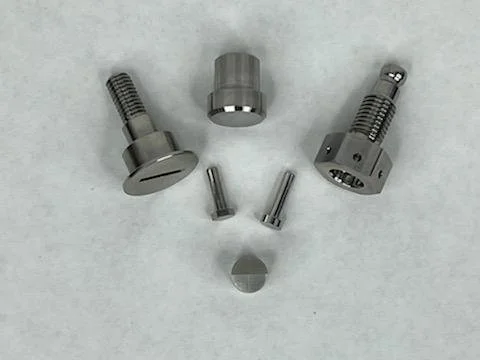
One recent job followed a common pattern for parts with challenging materials, multiple diameters, and close tolerances:
Bar preparation: Grind the starting bar stock to the required top diameter to save tool wear.
Swiss turning: Use Swiss equipment to produce the part’s geometry for maximum precision.
Post-Swiss grinding services: We then finish certain diameters and features with tight tolerances by centerless grinding to achieve those requirements. We will also use our thread rolling department for parts that require a rolled thread vs. a cut thread.
Verification: Confirm results through inspection. Our strong quality department is a critical factor in our Swiss success.
Instead of splitting that workflow across multiple suppliers, your process can be simplified with a single partner. And our greater control of the process from end-to-end ensures the best possible results without risk of any breakdown in communication between vendors.
We’ll Handle Your Toughest Swiss Work
If you need a partner that can run tough projects with confidence, United Centerless Grinding and Thread Rolling is ready to help. We’re ready to tackle hard materials, high length-to-diameter ratios, and more.
Request a quote today from our Swiss machine shop, and we’ll show you how we can simplify your project and improve your results by keeping more of the process in-house.